

3D Printing vs. CNC Machining. Which Process Fits Your Part?
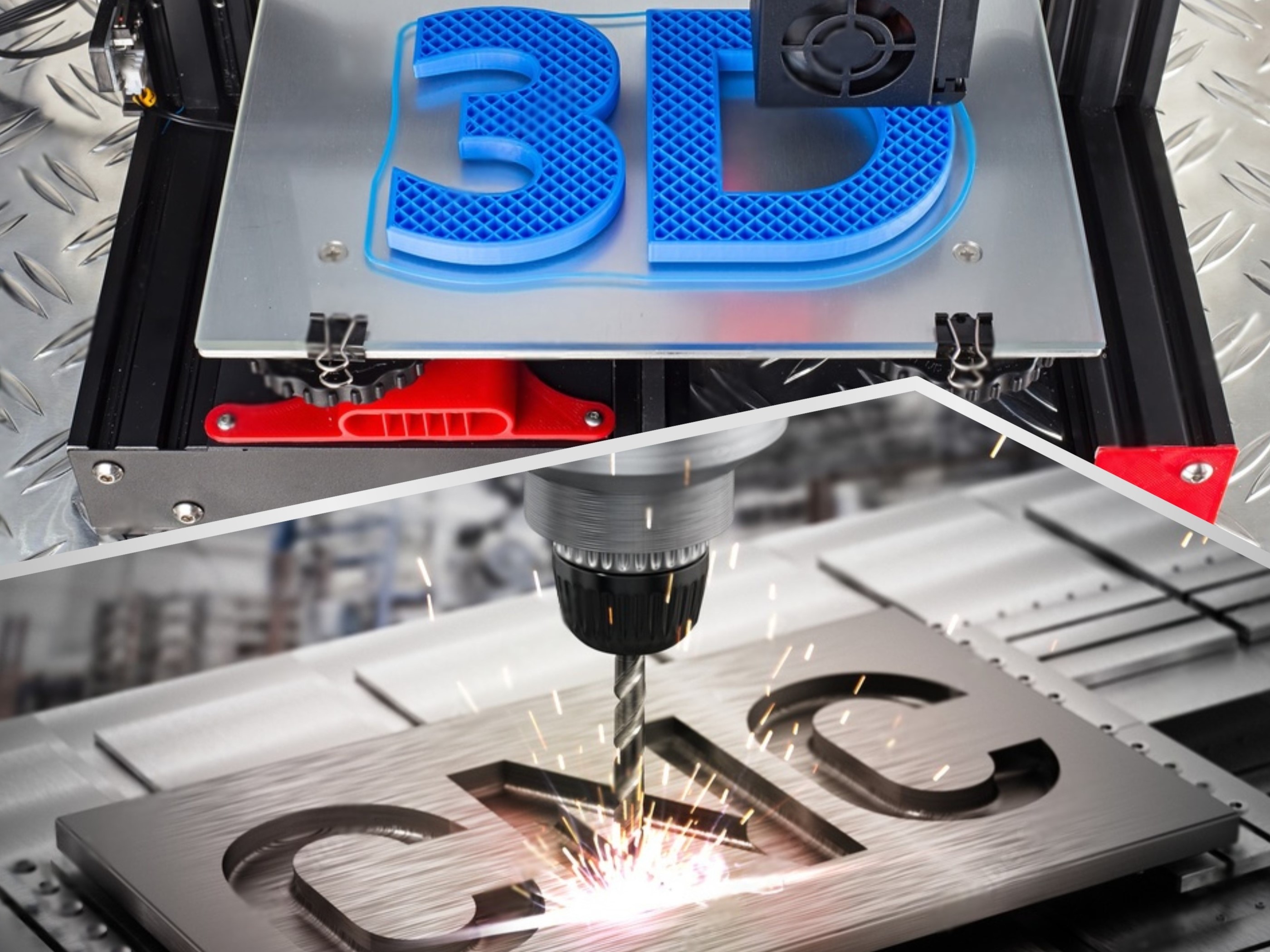
3D printing and CNC machining are often compared because both processes can produce a physical part from a digital model. However, they approach manufacturing in very different ways. A 3D printer builds the part by adding material layer by layer. A CNC machine starts with a solid bar, plate or block and removes material with cutting tools.
This difference affects the types of shapes each process can produce, the available materials, achievable accuracy, surface quality and overall cost. Neither method is suitable for every project. The decision should begin with the part drawing and its intended use.
Part Geometry and Design Changes
3D printing is useful when a design is still being developed. A prototype can be produced without preparing a mould or dedicated machining fixture, making it easier to check the shape, assembly and general function before finalizing the design. The process can also produce internal channels, lattice structures and other geometries that may be difficult for a cutting tool to reach. This makes it suitable for certain lightweight components, customized products and complex prototypes. CNC machining requires tool access to each machined feature. The workpiece may need to be turned or repositioned, and more complex parts can require several axes or setups. These points should be considered when reviewing the drawing.
However, many common production features are well suited to CNC machining. Accurate holes, threads, sealing surfaces, bearing locations and controlled outside diameters can be produced using established cutting and inspection methods.
Material Requirements
Material is often one of the first factors to consider. CNC machining can process a wide range of materials commonly used in production, including aluminium, carbon steel, stainless steel, brass, copper, titanium alloys and engineering plastics. This makes it easier to use the material specified on an existing production drawing. The materials available for 3D printing depend on the printing system. Plastic printing is widely used for visual models, fixtures and functional prototypes. Industrial metal printing can produce stainless steel, aluminium, titanium and other alloys, but it requires different equipment and additional process control.
A printed metal part and a part machined from wrought material may have different properties, even if the material names are similar. Density, strength direction, heat treatment and certification should be reviewed when the component has structural or safety requirements.
Accuracy and Surface Finish
CNC machining is commonly selected when a drawing specifies tight dimensional tolerances or a controlled surface finish. The final result still depends on the machine, tooling, workholding, material and cutting conditions. With a stable process, CNC machining can produce accurate diameters, holes, threads and flat surfaces repeatedly.
A 3D-printed part usually shows some evidence of the layer-building process. The amount varies according to the printing method, material, layer thickness and orientation. Removing support structures may also leave marks on the surface. Post-processing is therefore an important part of the cost and lead time. Depending on the application, a printed component may require cleaning, curing, heat treatment, polishing or final machining. Some metal parts use both processes. The main shape is printed first, with additional material left on critical areas. Those areas are then CNC machined to reach the required dimensions and surface finish.
Quantity and Total Production Cost
It is common to associate 3D printing with prototypes and CNC machining with mass production. This is sometimes correct, but quantity alone does not determine the best process. For a one-off plastic model, 3D printing may require less preparation. The design can be produced directly from the digital file, which is helpful when several revisions are expected.
CNC machining requires process planning, tools, programming and workholding. Once these preparations are complete, the same machining cycle can be repeated. A simple aluminium or plastic part may still be economical to machine in a small quantity, especially when accuracy or material properties are important. The complete cost should include more than machine time. For 3D printing, support removal and other post-processing operations must be considered. For CNC machining, material removal, tooling, setup and fixture costs should be included.
Lead time can also depend on available equipment and production capacity. A process that is faster in theory may not provide the shortest delivery time in every factory.
Choosing a Process for the Part
3D printing may be a good choice when the design is still changing, the geometry is difficult to machine or only a small number of prototypes is required. CNC machining is often preferred when the part requires standard engineering materials, tight tolerances, accurate threads or a consistent surface finish. It is also suitable when the same component must be produced repeatedly under a controlled process.
In some projects, the two technologies are used at different stages. A company may print the first design model, machine functional samples for testing and then develop a CNC process for regular production. Other components may be printed close to their final shape and machined only on critical surfaces.
To evaluate the suitable method, the following information should be reviewed together:
• Part drawing or 3D model
• Required material
• Critical tolerances
• Surface-finish requirements
• Expected production quantity
• Functional requirements of the component
For parts intended for CNC production, customers can provide SELICA with the drawing, material and expected volume. Our sales and engineering teams can review the machining features and recommend a suitable machine configuration. The correct manufacturing process depends on what the finished part needs to achieve. A clear drawing and realistic production requirements provide a better basis for the decision than a general comparison between the two technologies.