

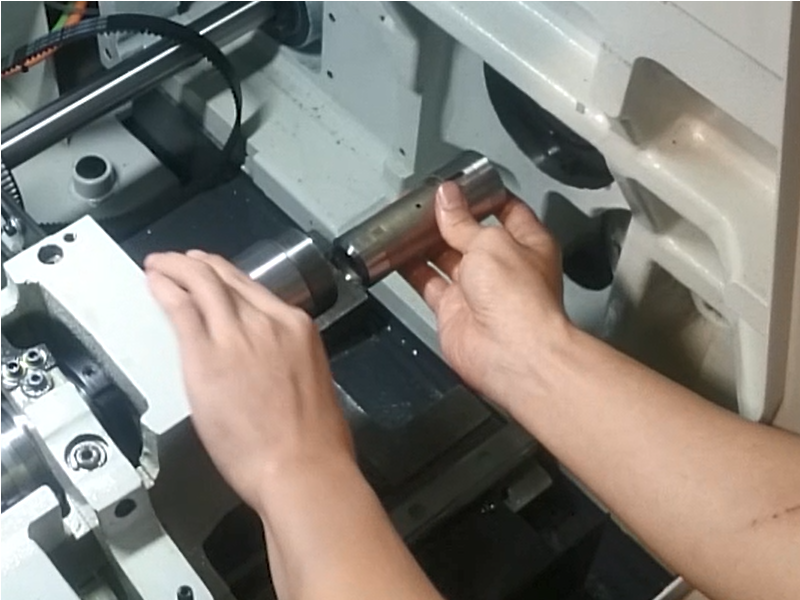
Swiss Turning 101: Collet Selection for Swiss-Type CNC Lathes
Start with the Actual Bar Size
The first thing to check is the actual diameter of the material. This sounds obvious, but the nominal bar size is not always the same as the real size. A Ø20 mm bar, for example, may measure slightly larger or smaller depending on the material supplier and tolerance. A collet that is too tight may not clamp evenly or may create excessive pressure on the bar. A collet that is too loose may still close, but the contact area and gripping force may not be ideal. For high-volume production, it is worth checking several pieces of raw material instead of measuring only one bar. If the stock diameter varies noticeably from batch to batch, this should also be considered when selecting the collet.
Round Bar Is Not the Only Option
Most Swiss-type CNC lathes are used with round bar stock, but hexagonal, square, or specially shaped material can also be machined. The collet should match the shape of the material.Using a round collet for material that does not have consistent round contact can lead to poor gripping, deformation, or unstable positioning. For hexagonal or special-profile stock, a matching collet is normally the safer choice. This is especially important when the material must maintain a certain orientation during machining.
Main Spindle and Sub-Spindle Collets Have Different Jobs
A Swiss-type CNC lathe normally has a collet on the main spindle, and many machines also use another collet on the sub-spindle. They may look similar, but their working conditions are different. The main spindle collet continuously clamps the incoming bar material and must maintain good concentricity during the main machining process. The sub-spindle collet, on the other hand, usually receives a partially finished component from the main spindle. At this stage, the gripping surface may already be machined and could require more care to avoid leaving marks. Because of this, the same approach should not automatically be used for both sides. For some parts, the sub-spindle collet may need a larger contact area, a special bore, or a different clamping pressure to protect the finished surface.
Runout Matters More Than Many People Expect
One of the main reasons collets are used on Swiss-type lathes is their ability to provide accurate and repeatable clamping. But the collet itself is only part of the system. Runout can also come from the spindle nose, collet seat, dirt between contact surfaces, damaged collets, or inconsistent bar stock. If very tight tolerances are required, simply buying a “high precision” collet does not guarantee the final result. The entire clamping system needs to be clean and in good condition. A small chip trapped between the collet and spindle can already affect concentricity. For this reason, regular cleaning and inspection of the collet system is a simple maintenance habit that can prevent a surprising number of machining problems.
More Clamping Force Is Not Always Better
It is easy to assume that stronger clamping is always safer. In reality, excessive clamping force can create other problems. Thin-walled parts or softer materials can deform under too much pressure. Finished surfaces can also be marked, especially on the sub-spindle side. For small-diameter precision parts, the goal is not to use the maximum possible force. The goal is to use enough force to hold the workpiece securely without damaging or distorting it. If the material is slipping, increasing pressure may solve the problem, but it is also worth checking whether the collet size and contact area are correct. Sometimes the issue is not insufficient force. It is poor contact.
Pay Attention to the Clamping Length
The length of material held inside the collet also affects stability. A longer contact area generally distributes the clamping force more evenly, while a very short gripping area may create higher local pressure. However, the correct clamping length depends on the part geometry and machining process. On the sub-spindle, for example, there may be very limited space available for gripping because most of the part has already been machined. This is where custom-bored or step collets can become useful. Instead of forcing a standard collet to work with an unsuitable part shape, the collet can be prepared specifically for the component. For repeat production, this often provides a much more stable result.
The Guide Bushing Also Needs Attention
On a conventional Swiss-type machine, the collet and guide bushing work together. The collet drives and positions the bar, while the guide bushing supports the material close to the cutting area. Because of this, selecting the correct collet while ignoring the guide bushing can still lead to poor machining results. The guide bushing bore needs to match the bar material correctly. Too much clearance can reduce support and increase vibration. Too little clearance can cause feeding problems, particularly if the bar is not perfectly straight or its diameter varies. For long, slender parts, this relationship becomes even more important.
A Small Part of the Machine, but an Important One
Collet selection is easy to overlook because the collet itself is relatively simple. But on a Swiss-type CNC lathe, the spindle, collet, guide bushing, bar feeder, cutting tools, and raw material all work as one system. If one part of that system is not matched correctly, the machine may still run, but the process may not be stable. Before production starts, it is worth confirming the actual material size, workpiece shape, gripping position, required runout, surface condition, and clamping requirement. A correctly selected collet will not make a difficult part easy by itself, but it removes one common source of unnecessary problems. For Swiss-type machining, that can make a noticeable difference over thousands of parts.