
When Does a Swiss-Type Lathe Need a B-Axis?
Modern Swiss-type lathes can perform much more than turning. Driven tools, C-axis spindle control and Y-axis movement allow drilling, milling and tapping operations to be completed while the part remains in the machine. For many components, this standard configuration is enough. The driven tools approach the workpiece from fixed directions, and the spindle C-axis positions the part around its circumference.
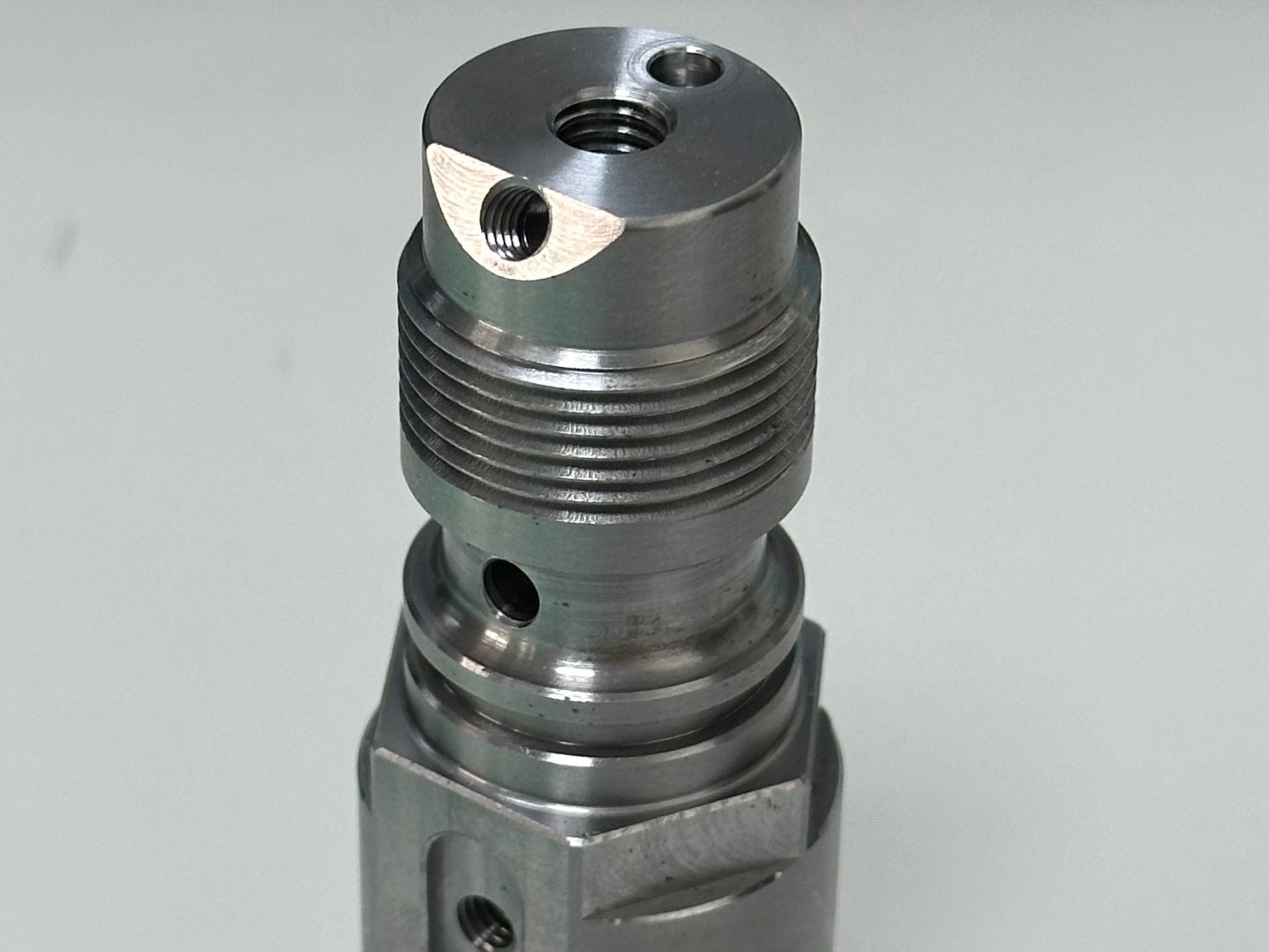
The process becomes more difficult when the drawing includes angled holes, inclined surfaces or features that cannot be reached from a standard axial or radial tool position. This is where a B-axis can provide a practical advantage.
What Does the B-Axis Control?
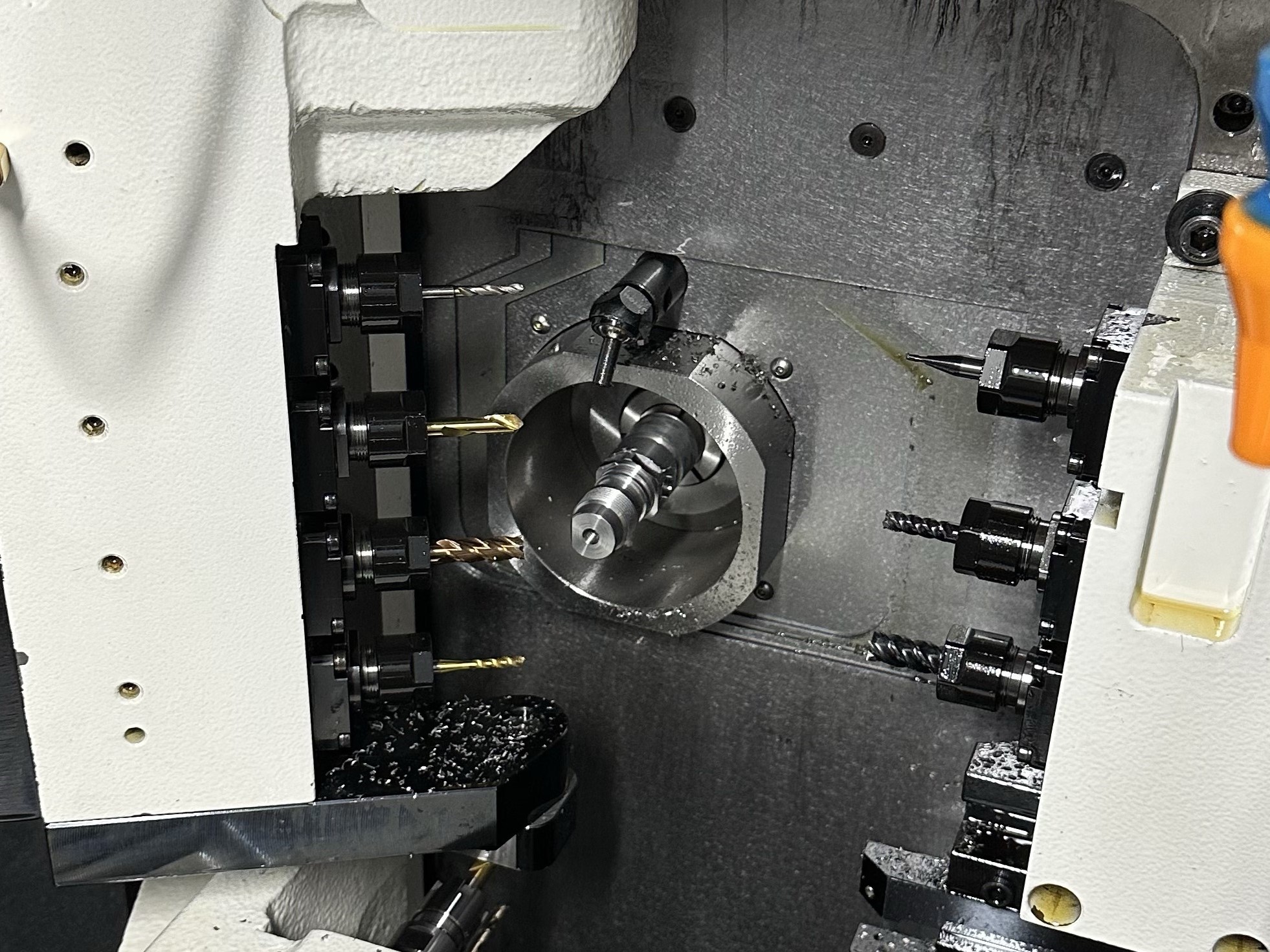
On a Swiss-type lathe, the B-axis controls the angular position of the driven-tool unit. Instead of keeping the tool at one fixed angle, the CNC program can position it according to the required feature. The tool can then perform drilling, milling or tapping from an inclined direction.
The C-axis and B-axis have different roles. The C-axis controls the rotational position of the workpiece, while the B-axis changes the angle of the cutting tool. Used together with the machine’s linear axes, they allow the tool to approach the part from more directions. The available angle, tool positions and supported machining functions depend on the machine configuration. These points should be confirmed from the drawing before the process is finalized.
Parts That May Benefit from a B-Axis
A B-axis may be useful when the component includes:
• Angled drilling or tapping
• Inclined milled surfaces
• Features positioned at several different tool angles
• Holes that are not parallel or perpendicular to the spindle centreline
• Complex front-side features that would otherwise require another setup
These features are found in medical, aerospace, automotive and precision industrial components. However, the industry itself does not determine whether a B-axis is necessary. The decision comes from the actual geometry of the part. A relatively simple medical component may not need a B-axis, while an industrial connector with several angled ports may benefit from one.
Reducing Secondary Operations
Without a B-axis, an angled feature may require a fixed-angle tool holder, manual repositioning or a second machine. A fixed-angle holder can be a practical solution when the same feature is produced repeatedly at one angle. It is simpler and may cost less than a complete B-axis system.
The limitation is flexibility. If the part contains several different angles, additional holders or setups may be required. A CNC-controlled B-axis allows the tool angle to be changed through the program, which can make the process easier to arrange.
Completing more features in one setup can reduce part handling and help maintain the positional relationship between turned and milled features. It can also shorten the total production route when a separate milling operation is no longer required. The actual cycle-time benefit depends on the part and program. Adding a B-axis does not automatically make every component faster to produce.
SS-32ABY B-Axis Machining Demonstration
The SELICA SS-32ABY is equipped with a full CNC-controlled B-axis driven-tool system for multi-angle drilling and milling. The machine is intended for complex bar-fed components that require turning and angled machining within the same setup. The final tooling arrangement is selected according to the part drawing, required tool angles and possible interference. The following video shows the SS-32ABY performing B-axis machining and provides a closer look at the movement of the driven-tool unit.
Watch the SS-32ABY B-axis machining video:
https://www.facebook.com/share/v/1LmvSeqiES/
For smaller-diameter applications, the SELICA SS-26ABY provides a related B-axis configuration in the 26 mm machining range.
Start with the Part Drawing
Customers do not need to decide whether a B-axis is required before contacting SELICA. Please provide the part drawing, material, bar diameter and expected production volume. Our sales and engineering teams can review the angled features, tool access and required operations to determine whether a B-axis machine, a fixed-angle tool holder or a standard driven-tool configuration is the more practical solution.
The purpose of the B-axis is not simply to add another machine function. It should solve a specific tooling or setup problem in the machining process.